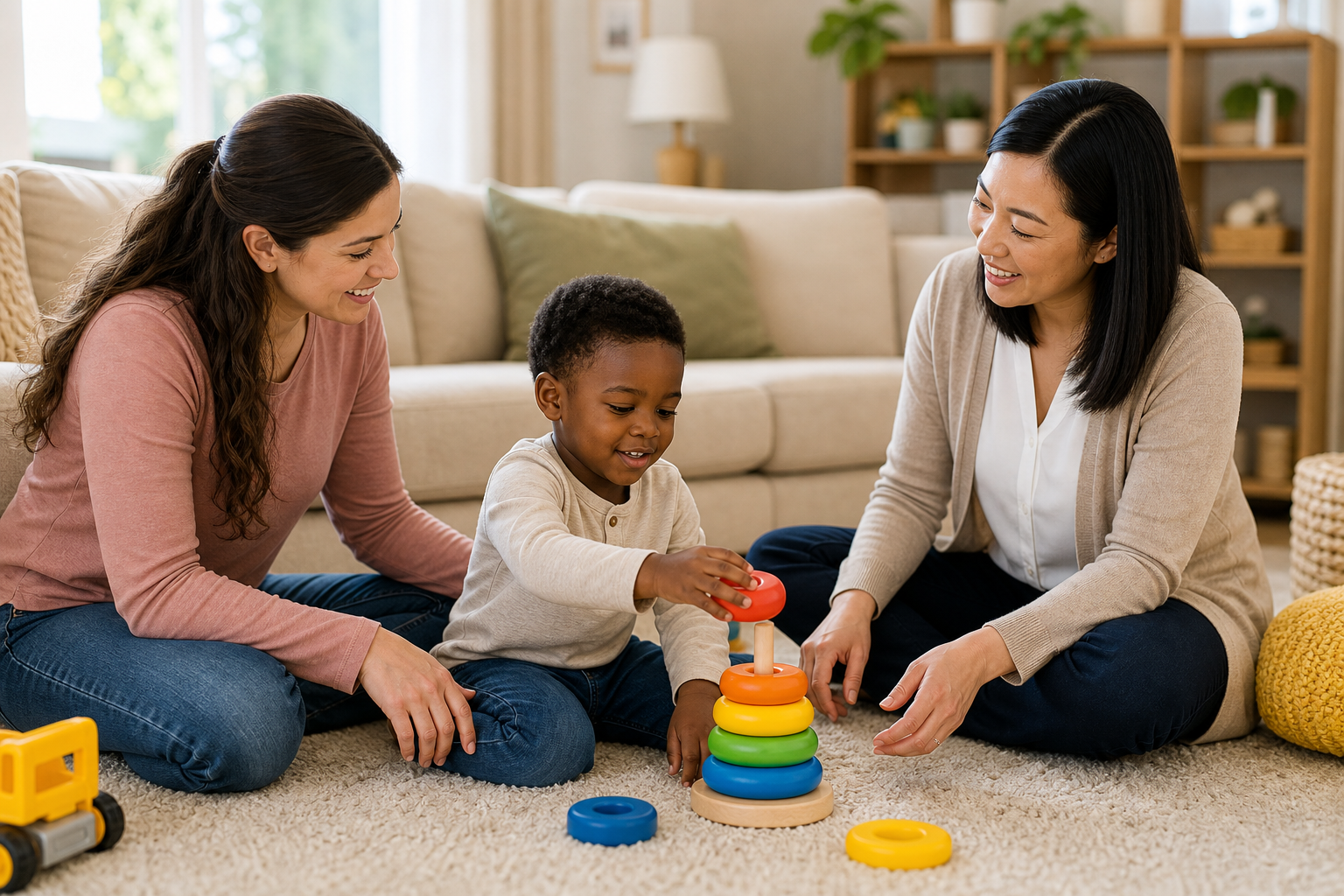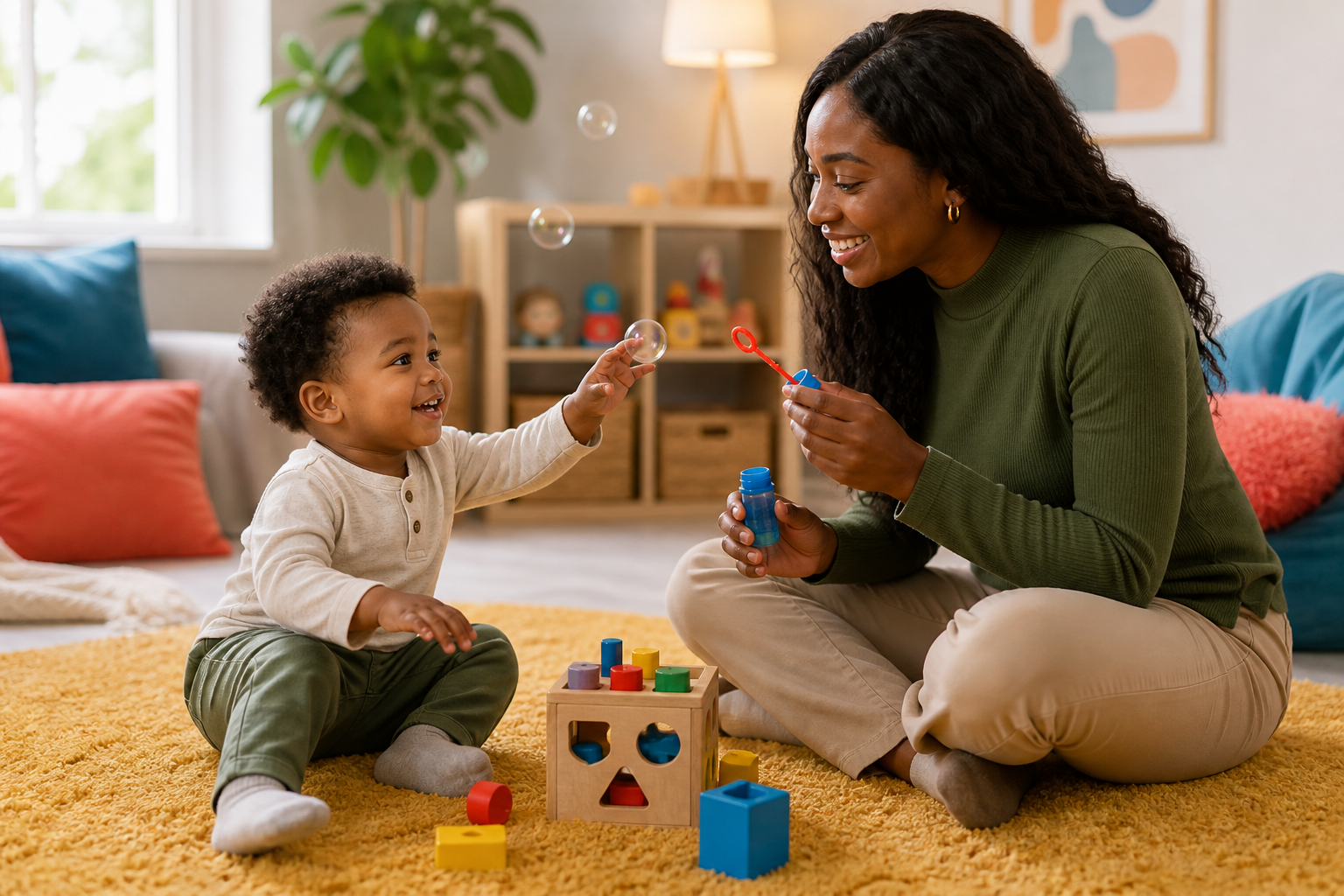




If you are considering parent training, it is normal to have mixed feelings. Many caregivers want to help their child as much as possible, but they are already managing appointments, routines, school communication, and everyday stress. The value of ABA parent training benefits is not that parents are expected to do more on their own. It is that they get clearer guidance, more practical tools, and better support for the moments that happen outside therapy.
For families wondering whether parent training is worth the time, the answer often depends on what they can expect from it in real life. Done well, parent training helps caregivers understand how to support progress during ordinary routines, reduce guesswork, and work more confidently with the therapy team. At Perfect Pair ABA, that process is most effective when it feels like a true partnership built around the child, the family, and the routines that matter most.
What ABA Parent Training Is
ABA parent training is guided coaching that helps caregivers use supportive, evidence-informed strategies during daily routines. Instead of focusing only on what happens in a therapy session, parent training helps families apply the same core principles at home, in the community, and during everyday transitions.
The goal is not to turn a parent into the therapist. The goal is to improve carryover, create more consistency, and help parents and clinicians communicate more clearly about what is working and what still feels hard. The CDC notes that behavior and communication approaches are common parts of autism support, and parent training helps families use those supports in the settings where daily life actually happens.
Why Parent Training Matters for Progress at Home and Beyond
Children often make the strongest functional gains when the adults around them respond in more consistent ways. When a child hears one expectation in therapy, a different one at home, and a third one at school, skills may stay stuck in one setting. Parent training helps close that gap by making support more practical and more aligned across environments.
That matters for emotional reasons as much as clinical ones. Parents often feel less overwhelmed when they understand why a strategy is being used, what progress should realistically look like, and when it makes sense to adjust the plan. Good coaching should increase clarity without creating blame.
For toddlers and preschoolers, this often shows up in routines such as mealtime, play, dressing, and transitions between activities. For school-age children, parent training may focus more on independence, homework routines, communication with teachers, and community expectations. Families who want to build stronger advocacy skills can also benefit from related guidance on communicating their child’s needs more clearly across settings.
The Core Benefits of ABA Parent Training
One of the biggest benefits of parent training is improved consistency. When caregivers learn how to respond in more predictable ways, routines can become less chaotic and expectations easier for a child to understand.
Another major benefit is stronger skill generalization. A child may use a communication skill in therapy but still struggle to use it at home, at school, or during errands. Parent training helps bridge that gap by giving caregivers practical ways to prompt, reinforce, and support the same skill in real situations. Families who want a deeper look at this process often benefit from reading more about skill generalization across settings.
Parent training can also improve caregiver confidence and decision-making. Instead of wondering whether they are helping or making things worse, parents begin to understand what to watch for, what to try first, and when to bring new questions back to the BCBA.
It also supports more effective responses to challenging behavior. Rather than relying on trial and error, caregivers learn to notice patterns, understand triggers, and use coached strategies that fit the child and the setting. Research summarized by the NICHD suggests that behavior-focused interventions are strongest when they are individualized and applied consistently over time.
Just as important, parent training can improve the parent-child relationship. When routines go more smoothly and parents have tools that feel workable, there is often more room for connection, shared success, and calmer problem-solving. In many cases, it also improves alignment between caregivers, therapists, teachers, and other providers, which makes support feel less fragmented.
The PAIR Carryover Loop
A helpful way to understand how parent training creates change is through the PAIR Carryover Loop. This framework keeps the process practical, focused, and collaborative instead of making families feel like they have to fix everything at once.
P – Pick the highest-friction routine
Start with the daily moment that creates the most stress or the biggest missed opportunity. That might be getting dressed in the morning, sitting for mealtime, ending screen time, leaving the house, or getting through bedtime.
For younger children, the friction point is often a short routine that happens many times a day. For older children, it may involve independence, school preparation, or transitions between environments. Focusing on one routine first makes coaching more specific and easier to apply.
A – Apply one coached strategy consistently
Most parents do not need a long list of techniques right away. They usually need one practical strategy they can use consistently with coaching and feedback. That may include reinforcement, prompting, transition setup, or visual supports.
The goal is not perfection. It is repetition with support. A parent who wants to better understand why positive reinforcement works, or how visual tools can reduce stress during routines, may benefit from exploring those topics in more detail through related resources.
I – Interpret what the child and environment are showing you
Parent training works best when families learn to look at patterns without judgment. That means noticing what happened before a hard moment, what the child may have been communicating, what support helped, and what made the situation harder.
This nonjudgmental lens matters. It shifts the focus away from blame and toward problem-solving. It also gives the therapy team better information so strategies can be refined around real-life conditions instead of guesses.
R – Review, refine, and repeat with the team
The final step is to bring those observations back to the BCBA or therapy team. When caregivers share what they are seeing at home, strategies can be adjusted, simplified, or expanded based on what is actually happening.
Over time, this review process helps skills become more portable across settings. It can also support better coordination with teachers and other providers when a child is working on similar goals in different environments. Families comparing home support with school-based help often need this kind of cross-setting clarity.
What Parents Actually Learn in ABA Parent Training
Parents usually learn a mix of practical skills rather than a lot of theory. They may learn how to reinforce desired behavior, use prompts more effectively, recognize patterns in challenging behavior, create more predictable routines, and share useful observations with the therapy team.
They also learn how to connect a strategy to a real routine. That difference matters. Understanding a concept in theory is not the same as trying it during breakfast, when a sibling is talking, the child is tired, and everyone needs to leave the house in ten minutes.
For younger children, coaching may focus on play, communication opportunities, early transitions, and simple self-help routines. For older children, it may include homework structure, independence with daily tasks, preparing for community outings, or managing expectations across home and school. The most useful parent training keeps those examples grounded in the family’s actual life.
What ABA Parent Training Can Look Like in Real Life
At mealtime, a parent might learn to give a simple prompt, wait a little longer before stepping in, and reinforce one small success such as requesting help or staying at the table for a short period. The win may be modest at first, but it is meaningful because it can be repeated every day.
During transitions, a caregiver might use a more consistent warning, a visual cue, and the same brief follow-through each time it is time to leave the park or start bedtime. If the child struggles, the team can review what part of the routine is breaking down instead of assuming the strategy failed.
In communication routines, parents may learn to notice early signs of frustration and build more opportunities for requesting, choosing, or asking for a break before behavior escalates. That is often more effective than waiting until the child is already overwhelmed.
In community or school-prep situations, parent training may focus on preparing for a grocery trip, handling waiting, practicing flexibility, or supporting transitions between classroom expectations and home expectations. Related resources on visual schedules, positive reinforcement at home, and home-versus-school support can be helpful when families want a deeper dive into those tools. The key is that none of these are quick fixes. They are coached strategies practiced in real situations over time.
Parent Training Readiness & Progress Checklist
A simple checklist can help families prepare for coaching and notice whether it is becoming useful in daily life.
Before training starts
- Identify the top two or three routines that feel the most stressful.
- Note the communication supports your child already uses.
- List favorite activities, motivators, or interests.
- Write down common triggers or situations that tend to lead to hard moments.
- Notice where challenges show up most often, such as home, school prep, outings, or bedtime.
This helps parents arrive with clear priorities instead of a vague sense that everything feels hard.
What to bring into coaching sessions
- What usually happens before, during, and after the hard moment?
- What questions do you want answered first?
- What have you already tried, and what seemed to help even a little?
- Are there any school or provider coordination issues affecting the routine?
- What does success look like for this routine right now?
This gives the BCBA real context to coach from rather than offering advice that feels too general.
How to tell it is helping at home
- Choose one strategy to test this week.
- Pick one sign of progress to watch for.
- Pick one sign that the plan needs adjustment.
- Keep a few simple notes to share with the team.
This makes progress easier to recognize and keeps families from feeling like they have to track everything at once.
Common Concerns About Parent Training
A common concern is that parent training sounds like one more task on an already full plate. In reality, good coaching should reduce friction, not add pressure. It should focus on the routine that matters most and make support feel more manageable.
Another concern is the fear of being expected to do therapy alone. That is not the purpose of parent training. Parents are not meant to replace direct clinical care. They are meant to understand how to support their child more confidently between sessions.
Some families also worry that if progress is slow, they must be doing something wrong. Progress rarely happens in a straight line. A strategy may need to be simplified, practiced more consistently, or adjusted to fit the child’s communication level, sensory needs, or environment.
Finally, parent training can feel vague when it is not tied to one routine and one observable goal. The best coaching is specific, collaborative, and flexible. If it feels too abstract, it is reasonable to ask for a clearer routine target, a simpler first step, or a more concrete way to measure whether the strategy is helping.
FAQ
What is parent training in ABA therapy?
Parent training in ABA therapy is guided coaching led by a qualified clinician, often a BCBA, to help caregivers use supportive strategies during everyday routines. It works alongside direct ABA services and focuses on carryover at home and in the community.
Why is parent training important in ABA therapy?
It is important because children often need support using skills outside formal sessions. Parent training improves consistency, strengthens generalization, and helps families and clinicians work as a more coordinated team.
What do parents learn in ABA parent training?
Parents often learn how to reinforce helpful behavior, use prompts, notice behavior patterns, support communication, and make routines more predictable. They also learn how to apply those strategies in real-life settings instead of only understanding them in theory.
Can parent training reduce stress at home?
It can reduce stress over time by making routines more understandable and helping caregivers respond more consistently. It is not usually an instant fix, but clearer strategies and more realistic expectations can make daily life feel more manageable.
Can parent training replace professional ABA therapy?
No. Parent training supports professional ABA therapy, but it does not replace direct clinical assessment, treatment planning, or intervention. Its purpose is to help families use strategies more confidently between sessions and across daily routines.