


If your toddler is having a hard time asking for help, joining play, or moving through daily routines, early intervention ABA in New Mexico may be one part of a broader support plan. Through play, everyday routines, individualized teaching, and caregiver coaching, ABA may help a child practice functional communication and participation before preschool. Families can learn about ABA therapy in New Mexico while confirming which local resources fit their situation.
It is understandable to want answers when communication, play, or transitions seem harder than expected. A concern does not tell you what a child’s diagnosis or future will be. It does mean you deserve clear information and a thoughtful way to decide what to ask next.
Quick facts
- Age context: This guide focuses on toddlers approaching preschool. New Mexico’s Family Infant Toddler (FIT) Program serves children from birth to age three when eligibility requirements are met.
- Skills families may discuss: Requesting, rejecting, asking for help, using gestures or AAC when clinically appropriate, responding to a name, following simple directions, joint attention, imitation, turn-taking, transitions, play, meals, dressing, and cleanup.
- Possible partners: A BCBA, RBT, SLP, OT, pediatrician, FIT team, preschool team, or Child Find contact may have a different role in the process.
- Possible settings: Support may take place at home, in a clinic, in a community setting, through a daycare or preschool partnership, or through telehealth when available and appropriate.
- Important caveat: Eligibility, diagnosis, coverage, authorization, staffing, language access, and provider availability vary. Confirm current details with the relevant program, health plan, and provider.
What Does Early Intervention ABA Mean for a New Mexico Toddler?
Early intervention ABA is individualized skill-building that may use play, daily routines, structured teaching, environmental supports, and caregiver coaching. A goal might be helping a child communicate “help,” choose between two snacks, join a turn-taking game, follow a cleanup routine, or indicate “all done” or “break.” The focus is meaningful participation in everyday life, not completing a fixed list of behaviors.
A BCBA may oversee the plan, while an RBT or another therapist may work directly with the child when appropriate. Caregivers help identify routines that matter to the family and share what they notice. Coordination with an SLP, OT, pediatrician, FIT team, daycare, or preschool team may also be useful.
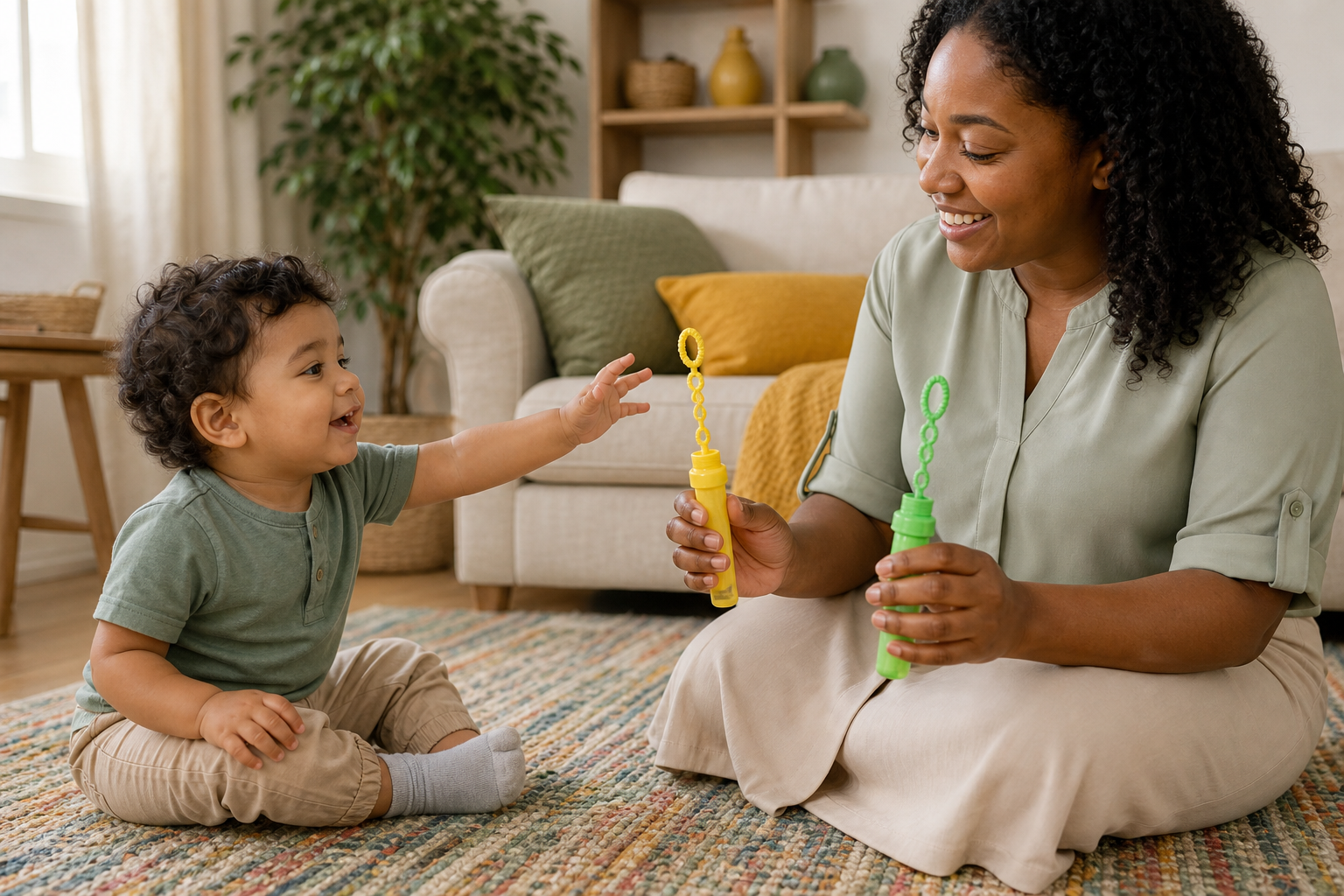
This is where pairing matters. The child and therapist need time to build rapport, and the clinical team needs to pair its plan with the family’s priorities, schedule, culture, and daily routines. A strengths-based approach can use a child’s interests, such as bubbles, songs, books, or favorite toys, as a starting point for communication and shared play.
ABA does not replace a developmental or autism evaluation, school services, speech therapy, occupational therapy, or family decision-making. It is one possible support within a broader plan.
Which Communication, Play, and Daily-Routine Skills Can Be Practiced Before Preschool?
Functional communication in everyday moments
Support may focus on requesting a preferred toy, rejecting an activity, choosing between options, responding to a name, following a simple direction, or asking for help. A child may communicate with speech, gestures, signs, pictures, or AAC when clinically appropriate. These goals can be practiced during meals, dressing, book sharing, getting ready to leave, and community routines.
An SLP or another qualified professional may contribute to communication planning. Parents can use the CDC’s 2-year milestones and ASHA’s communication milestones for ages 2 to 3 to prepare questions. Milestone lists are educational resources, not diagnostic tests. One missed skill does not determine whether a child has autism.
Play and social participation
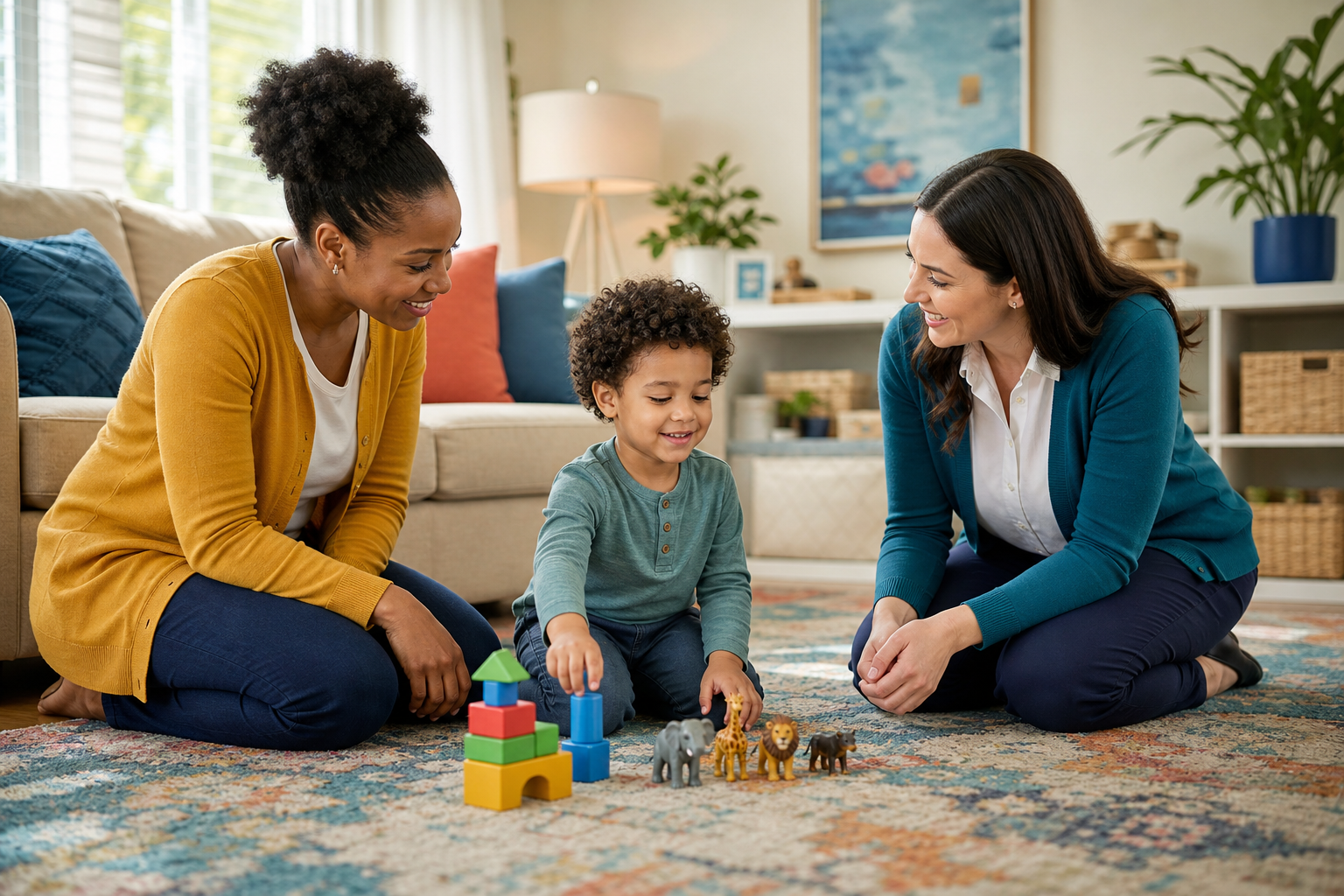
Early support may include sharing attention during a book, imitating an action in a song, taking turns with bubbles, joining a simple game, or building play around the child’s interests. The learning purpose might be noticing another person, communicating a choice, waiting for a turn, copying an action, or sharing enjoyment.
Peer participation can be supported gradually and respectfully. It does not need to look like forced performance. For more examples, read a guide to building early communication in nonverbal children. This article keeps the focus on choosing and coordinating early support in New Mexico.
Transitions and daily routines
Cleanup, moving between activities, waiting briefly, following a visual or verbal sequence, and joining a group routine may all be meaningful preschool preparation goals. A caregiver might offer a clear transition cue, show what comes next, or help the child communicate for a break. The right support depends on the child’s communication, regulation, sensory, and participation needs.
What might a session and caregiver coaching look like?
A preferred toy, snack choice, song, bubbles, or cleanup routine can become a natural opportunity to practice communication and participation. Play-based work can still be planned, observed, and adjusted to fit the child. Caregiver coaching helps adults identify useful routines, practice strategies, share observations, and carry goals across home, daycare, preschool, and community settings. For more context, read about parent training in ABA therapy.
How Does the First Connections to Preschool Map Move a Family from Concern to the Next Step?
The First Connections to Preschool Map is a decision framework for moving from an everyday concern to a coordinated next step. It does not score a child, diagnose autism, or decide which service is universally best.
Name the moment
Identify one or two routines where the child gets stuck, such as requesting help, joining play, transitioning, eating, dressing, or joining a group. Note what happened before and what the child may have been communicating.
Match the pathway
Separate the roles of FIT, developmental or autism evaluation, ABA, SLP, OT, pediatric follow-up, preschool support, and Child Find. Several supports may work together, but referral, eligibility, diagnosis, payer, and authorization rules need to be verified.
Build the bridge
Translate the family’s priority into practice through play, routines, caregiver coaching, and gestures, pictures, or AAC when appropriate. Preserve the child’s interests, dignity, and ability to pause or decline. A useful plan should support communication, not ask a child to ignore discomfort.
Carry it forward
Plan support across caregivers, home, daycare, preschool, and community settings. Shared language and transition cues can help adults respond consistently, but progress in one setting should not be assumed to generalize everywhere.
Review the fit
Revisit goals, family burden, setting, language access, supervision, data, and the child’s experience. The next move may be intake, a referral, bridge support, or a change in plan. It is not automatically more hours or one therapy model.
Is New Mexico’s FIT Program the Same as ABA?
No. New Mexico’s Family Infant Toddler, or FIT, Program and ABA may address related developmental needs, but they have different roles, eligibility questions, and service pathways. The New Mexico FIT Program provides information about services for children from birth to age three, evaluation, and an IFSP when a child qualifies. Confirm current details directly with the program.
| Pathway | Main question | What to verify |
|---|---|---|
| FIT | Does a child under three qualify for early-intervention support? | Evaluation, referral, IFSP, and current eligibility information. |
| ABA | Could individualized goals and caregiver coaching address functional skills? | Assessment, BCBA oversight, provider fit, payer rules, authorization, setting, and availability. |
| SLP or OT | What communication, motor, sensory, feeding, or participation needs may benefit from specialized support? | Professional evaluation and coordination with the child’s broader team. |
| Pediatric or developmental evaluation | What may explain the child’s developmental pattern, and what should happen next? | Screening, referral, diagnostic questions, and medical guidance. |
| Preschool or Child Find | What school-based evaluation or support may be relevant after age three? | Current district and state processes, timelines, and family rights. |
These pathways can relate to one another. FIT is not the same as ABA, and ABA should not be described as a replacement for school or other therapies. Coverage and diagnosis requirements are not universal. Review current New Mexico Health Care Authority autism resources and ask qualified professionals and payers to confirm the rules that apply to your child.
Which New Mexico Early Support Path Comes Next?
Use this orientation tool to choose a question to investigate. It is not a diagnostic screener, benefits determination, or substitute for professional advice.
- Start with the child’s stage. Is the child under three, approaching three, or already in preschool? Under-three families can review FIT information while verifying other pathways separately.
- Name the pressure point. Is the main concern communication, play, transitions, safety, daily living, regulation, or preschool participation? Bring one or two specific examples.
- Map current supports. Note whether an SLP, OT, pediatrician, FIT plan, daycare plan, or school evaluation is already involved. Find the missing connection before adding another service.
- Clarify evaluation status. Ask whether concerns have been raised, screening requested, or a diagnosis received. Milestone resources can inform these conversations, but they do not diagnose.
- Ask whether ABA fits the stated need. Ask about goals, BCBA oversight, therapist-child rapport, caregiver coaching, assent, communication supports, coordination, setting, and language access.
- Identify the access barrier. The barrier may be referral, payer verification, network, staffing, geography, language, schedule, or family bandwidth. Route it to the appropriate verification step.
- Prepare for preschool. Create a handoff list covering communication methods, routines, transition supports, current goals, and school coordination.
- Choose a reasonable next lane. Start or continue evaluation and intake, use bridge supports while moving forward, or pause to clarify fit. Recheck eligibility, coverage, and availability.
How Do Families Start Early Intervention Services in New Mexico?
A practical starting sequence is:
- Share specific communication, play, or routine concerns with a pediatrician or trusted provider.
- Ask about developmental or autism screening and evaluation when appropriate.
- For a child under three, review current FIT evaluation and referral information.
- Use the New Mexico Health Care Authority autism page for current diagnostic and service-navigation information.
- Review the HCA ABA provider-information page when checking provider or policy details.
- Ask each provider and payer to verify eligibility, authorization, service setting, language access, geography, and current availability for the individual child.
Families can ask who supervises care, how goals are chosen, how caregivers are coached, and how the provider coordinates with SLP, OT, FIT, daycare, or preschool. FIT materials may include English, Spanish, Diné, and Vietnamese resources, but provider language and setting options vary.
How Can Early Support Carry Into Preschool and After Age Three?
Preschool participation is broader than a readiness score. Goals may include communicating a need or break, following directions, moving between activities, joining a group routine, taking turns, self-care, and asking for help. Support should carry across daily environments with coordination among caregivers, preschool, FIT, SLP, OT, pediatric, and therapy teams when appropriate.
As age three approaches, families may need a separate conversation about preschool supports, Child Find, or school-district evaluation. Details vary. A useful handoff note includes communication methods, successful supports, transition cues, regulation needs, current providers, and routines that still need help.
For a deeper overview, read how ABA therapy supports school readiness. If you are reviewing provider options, learn about local ABA therapy in New Mexico and ask the provider to confirm current service geography and fit for your child.
FAQ: Early Intervention ABA for Toddlers in New Mexico
What is early intervention ABA therapy for toddlers?
It is individualized skill-building through play, routines, structured teaching, and caregiver coaching. Goals may involve communication, participation, transitions, play, or daily living, without promising a fixed outcome.
How can ABA therapy help a toddler communicate before preschool?
Support may address requesting, choices, gestures, speech, pictures, or AAC when appropriate, along with joint attention, imitation, turn-taking, and communication during routines. Goals should be individualized, supervised by qualified professionals, discussed with caregivers, and coordinated with an SLP or other providers when appropriate.
Can a child receive early support before a formal autism diagnosis?
The answer depends on the program, evaluation status, payer, provider, and current New Mexico rules. FIT, evaluation, ABA intake, and insurance requirements are separate questions, so families should verify the applicable pathway rather than rely on a universal rule.
What is the difference between New Mexico FIT and ABA?
FIT is New Mexico’s early-intervention program for eligible children from birth to age three. ABA is an individualized service that may address functional goals. They are not interchangeable and may coordinate with other supports.
What age can a child start ABA therapy in New Mexico?
There is no universal start age. It can depend on the child’s needs, evaluation, referral, payer, provider model, setting, and current requirements. Ask providers to verify eligibility, coverage, availability, and supervision.
What happens when a child turns three?
Families may need to discuss preschool supports, Child Find, or school-district evaluation while coordinating medical, therapy, and family supports. Share communication methods, successful routines, transition cues, and current providers, then confirm the process with the relevant school or state resource.
Early support is a way to help a child communicate, connect, participate, and learn in everyday routines before preschool. A calm next step may be sharing specific examples with a trusted professional, reviewing New Mexico’s current resources, or discussing whether a collaborative ABA evaluation fits the family’s needs.