



If your child wants to connect with other kids but struggles to join in, keep a conversation going, or recover after an awkward moment, you are not alone. ABA therapy social confidence friendship skills autism is a topic many parents search when recess feels hard, playdates fall apart quickly, or school feedback suggests peer relationships are becoming a bigger concern.
For many children, the goal is not simply “make friends.” It is learning the smaller skills that help friendship become more possible over time: joining a game, handling turn-taking, noticing social cues, staying with an activity, and trying again after a miss. This article explains how ABA therapy can support those building blocks, what meaningful progress can look like, and how to think about confidence in a realistic, child-centered way.
Why Social Confidence and Friendship Can Be Hard for Some Autistic Children
Friendship challenges can show up in ways parents recognize right away. A child may want to play with peers but not know how to enter a group. They may start talking about a favorite topic without noticing whether the other child is interested. They may have trouble taking turns, coping with losing, or bouncing back after a peer says no.
The CDC notes that autism can affect social communication and interaction in different ways, and those differences often become more visible in school, play, and group settings as social demands increase. Learn more from the CDC.
It is also important to remember that social confidence is rarely about one issue alone. A child may be working through a combination of communication differences, emotional regulation, sensory overload, difficulty with flexibility, or a setting that simply moves too fast. In one environment, they may do well with familiar siblings. In another, such as recess or a birthday party, the same child may feel overwhelmed or unsure how to keep up.
For parents, this can feel painful and hard to read. You may see your child wanting connection while also avoiding group activities, feeling discouraged after peer interactions, or hearing from teachers that social moments are still difficult. That does not mean your child is incapable of friendship. It usually means they need the right support, in the right steps, in the right settings.
How ABA Therapy Builds the Skills Behind Confidence and Friendship
ABA therapy looks at a broad goal like “build social confidence” and breaks it into smaller, teachable parts. Instead of treating friendship as one skill, a therapist identifies the specific barrier getting in the way. From there, the child can practice a targeted skill, receive support and reinforcement, and gradually use that skill in more natural situations.
In practical terms, that process often looks like this: identify the challenge, teach the skill in manageable steps, prompt and reinforce successful attempts, practice in realistic settings, and watch for carryover beyond therapy sessions. Research and clinical practice suggest that confidence often grows after repeated supported success, not from explanation alone. The National Institute of Child Health and Human Development describes ABA as an approach that can help teach useful skills and reduce barriers to learning and daily functioning. Read the NICHD overview of ABA therapy.
That matters because confidence is not just a feeling. For many children, confidence is built through experience. When a child practices joining an activity, succeeds with support, and begins to see that peer moments can go better than expected, they are often more willing to try again.
Progress is individualized and usually gradual. A child may first show a new skill with a therapist, then with a sibling, then with one familiar peer, and only later in larger or less predictable group settings. If you want a broader look at how ABA supports everyday development, ABA Therapy: Encouraging Practical Skill Development in Kids with Autism explains that foundation in more detail.
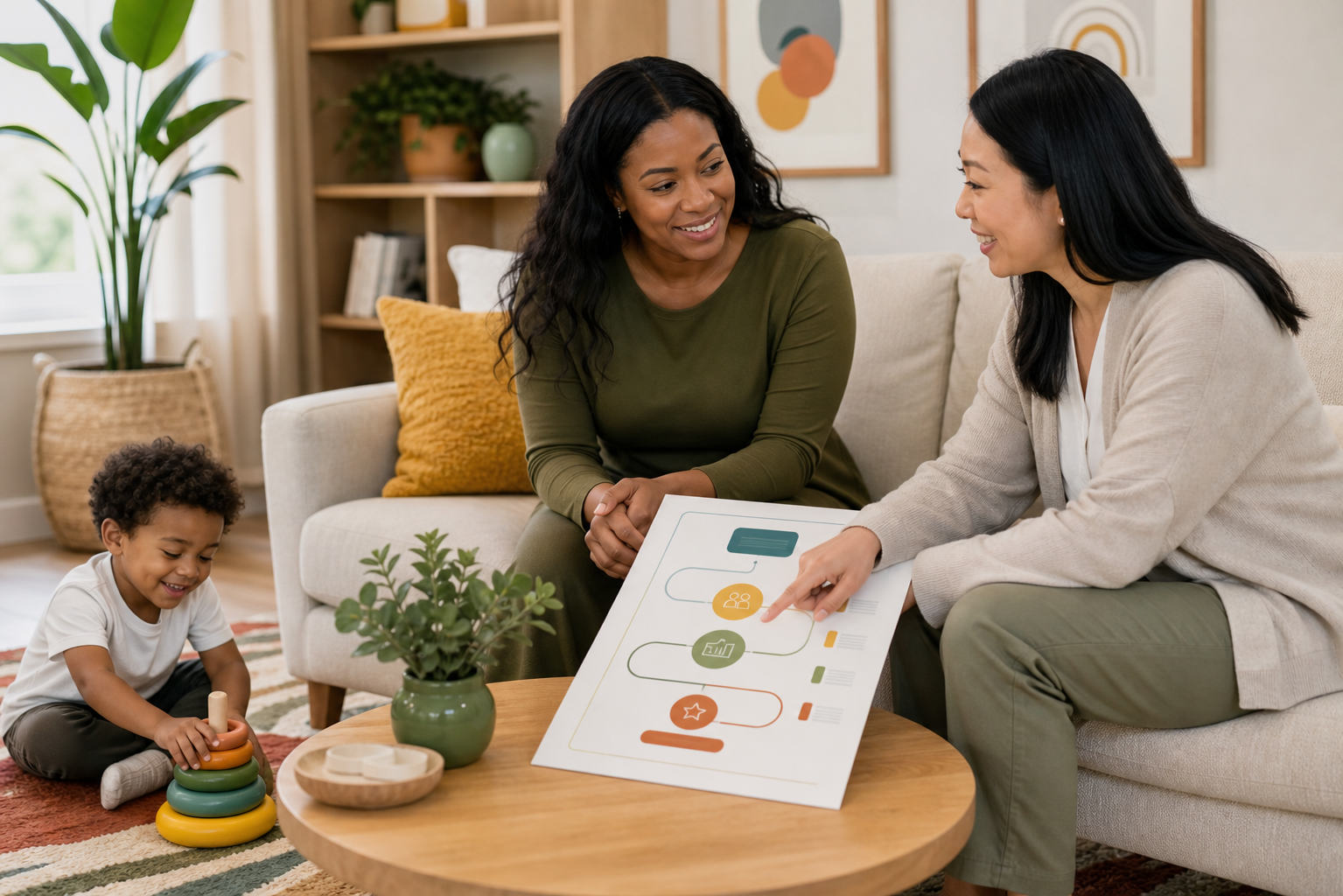
PAIR Friendship Growth Map
P – Pinpoint the Friendship Barrier
A broad goal such as “help my child make friends” is understandable, but it is often too wide to guide useful intervention. A more effective starting point is identifying the exact barrier. Is your child unsure how to ask to join a game? Do they struggle to wait for a turn? Are they missing cues that another child wants space? Do they shut down after one awkward exchange?
When the barrier is specific, support can become more specific too. A child who can start conversations but cannot recover after a peer says “not now” needs a different plan than a child who wants to join play but does not know how to enter.
A – Align the Goal With a Real Setting
Friendship skills become more meaningful when they are tied to where the child actually needs them. A goal might focus on joining a recess game, participating in classroom partner work, staying engaged during a playdate, or handling turn-taking during sibling play.
This setting-based approach helps parents, teachers, and clinicians observe the same thing in a real context. It also keeps expectations grounded. Success in a quiet therapy room is helpful, but the larger goal is whether the child can use that skill where peer interaction really happens.
I – Increase Supported Success Moments
Children often build confidence through small wins that feel achievable. A therapist may coach a child through one part of a peer interaction, reinforce the effort, and repeat that practice across multiple moments. Over time, those supported successes can help the child stay in the interaction longer, tolerate mistakes, and try again after a miss.
This should not look like forcing a child into scripted performance. Strong ABA support stays responsive to the child, uses their interests and strengths, and builds participation in ways that are realistic rather than pressured.
R – Review What Transfers Into Real Relationships
A skill matters most when it starts showing up outside the original teaching moment. Parents and care teams can look for whether the child uses the skill with familiar peers, less familiar peers, or across home, school, and community settings. It also helps to notice confidence markers such as approaching other children more willingly or re-engaging after an awkward moment.
If you are trying to decide when structured social-skills support may be the next step, Social Skills for Autism: Is Your Child Ready for Social Skills Training? offers a helpful deeper look without repeating the full discussion here.
Friendship Skills ABA Can Target and Practice
Starting and Joining Interactions
Some children need support with the very first step of friendship: getting in. That can include greeting a peer, asking to join a game, starting a simple conversation, or moving into shared play without hovering nearby and then walking away. For a school-age child, this might mean practicing how to approach classmates at recess or how to ask a child at the playground if they can take a turn.
Sharing Attention and Taking Turns
Friendship depends on more than wanting to be around other kids. It also depends on waiting, sharing control of an activity, and tolerating moments that do not go exactly as expected. A child may need help with taking turns in a board game, letting another child choose the next activity, or staying calm when they are not first in line. These skills support both peer acceptance and the child’s ability to keep participating.
Reading Cues and Responding Socially
Children may also need support noticing body language, tone of voice, shared interest, or signs that a peer wants a different pace. Social communication is individualized, so this is not about teaching one “correct” way to interact. It is about helping the child notice patterns that make peer situations easier to navigate and less confusing.
Keeping the Interaction Going
Starting an interaction is only one piece. Children may also need practice with back-and-forth conversation, asking a follow-up question, staying in a shared activity, or repairing a small mistake. These are the skills that move a moment beyond a single successful script and closer to a real relationship over time.
How Skills Transfer Into Real Peer Settings
Generalization is where confidence becomes easier to recognize. A child might demonstrate a skill in therapy first, but the bigger question is whether it appears during recess, classroom groups, playdates, sibling activities, community programs, or family gatherings.
For example, a child who once stood at the edge of playground games may start approaching peers more willingly. A child who used to leave group art class after one frustrating moment may stay longer and accept coaching. Another may begin trying again after a classmate does not respond the first time. These are not always dramatic changes, but they are often meaningful signs that confidence is building.
Progress is rarely linear. Some settings are louder, faster, or less predictable than others. A child may show a skill consistently with one cousin and still need support at school. That does not erase progress. It simply shows where the next layer of practice is needed.
How Parents and Care Teams Can Support Carryover Without Forcing It
Parents, therapists, and teachers usually make the most progress when they work from the same target. That collaborative approach fits Perfect Pair ABA’s pairing philosophy: supporting the child through partnership rather than pressure.
At home, carryover often works best when it stays natural. You might practice waiting during a favorite game, coach one simple way to ask a sibling to play, or prepare for a playdate with one specific goal in mind. Teachers can help by noticing the same skill in classroom groups or recess and sharing what support level is still needed.
It is also helpful to ask the therapy team practical questions: What skill are we targeting right now? What should success look like this month? Where should we practice it? How much prompting is still appropriate? If you want more ideas for reinforcing progress in daily routines, Benefits of ABA Parent Training: How It Helps Families Support Progress at Home is a useful next read.
Friendship Confidence Transfer Checklist
Target Skill
- What friendship-related skill is being targeted right now?
- In which setting is it hardest: recess, classroom groups, playdates, sibling play, or community activities?
- What moment tends to break down first?
- How much support does your child currently need?
Confidence Markers
- Is your child more willing to approach peers?
- Can they stay in a shared activity a little longer?
- Do they try again after a social miss?
- Are they tolerating small mistakes more calmly?
- Can they accept coaching without shutting down?
Real-World Transfer
- Does the skill show up with siblings?
- Does it happen at recess or during playdates?
- Does it appear in community groups or only in therapy?
- Is your child using it only with familiar peers, or with less familiar peers too?
Questions for the Team
- What does meaningful progress look like this month?
- What should home and school reinforce in the same way?
- Is the current goal still too broad and in need of a smaller step?
- Would a different setting make practice easier or more useful?
FAQ
How does ABA therapy help improve social skills in children with autism?
ABA therapy helps by identifying the specific social building blocks a child needs, teaching those skills in smaller steps, and practicing them with support until they become more usable in everyday settings.
Can ABA therapy improve social confidence in autistic children?
It can support social confidence by creating repeated, supported successes. Confidence often grows as a child experiences more positive peer moments across therapy, home, school, and community settings.
What friendship skills are commonly taught in ABA therapy?
Common targets include joining play, sharing attention, taking turns, starting conversations, reading social cues, staying in an interaction, and repairing small social mistakes.
How does ABA help children with autism make and keep friends?
ABA focuses on the component skills behind friendship, such as reciprocity, flexibility, communication, and recovery after awkward moments. Keeping friends usually develops gradually as those smaller skills become more consistent in real life.
What ABA strategies help with peer relationships at school?
Helpful strategies often include practicing group participation, supporting recess interactions, preparing for transitions, reinforcing shared activities, and coordinating with teachers so the same goals are supported across settings.
How can parents support friendship skills at home?
Parents can support carryover by practicing one specific target in natural routines, noticing small confidence gains, and staying aligned with the therapy team. For more detailed home support ideas, see Benefits of ABA Parent Training: How It Helps Families Support Progress at Home.