


Family outings can feel like a lot when you are trying to balance everyone’s needs and keep the day from tipping into overload. When parents look for autism-friendly things to do in Phoenix, they usually are not searching for the busiest attraction or the longest itinerary. They want something that feels doable for their child, their schedule, and the kind of day they are actually having.
This guide can help you make that call with a little more confidence. It walks through how to choose a better-fit outing, what to bring, and what to do if sensory overload starts anyway. The goal is not to make every outing perfect. It is to make outings feel more predictable, flexible, and manageable.
Choose the Right Outing for Today Before You Pick a Place
Before you settle on a destination, start with the day your child is actually having. Sleep, hunger, recent transitions, illness, sibling dynamics, and how much recovery time you have later all shape whether an outing feels manageable.
In Phoenix, the environment matters too. Heat, bright light, long walks from the parking lot, time in the car, and crowded indoor spaces can all add to sensory load before the main activity even begins. A short morning outing may go much better than a longer afternoon one, even if the destination sounds fun on paper.
For toddlers and preschoolers, short visits, snack timing, stroller access, and minimal waiting often make the biggest difference. School-age children may do better when they can preview what is coming, choose between two options, and know when breaks are built in. Mixed-age family outings usually go more smoothly when the adults agree ahead of time that the plan can be shortened, adjusted, or split if needed.
If your child is especially sensitive to sound, lighting, or sudden changes, it can help to revisit why certain environments feel overwhelming before planning a busy day. The most helpful question is not, “What is the best outing?” It is, “What is the best fit today?”
Use the P.A.T.H. Outing Match
The P.A.T.H. Outing Match is a simple way to think through whether a Phoenix outing is likely to feel manageable on a given day.
P: Present state
Start with your child’s current body state. Are they rested, hungry, already overstimulated, coming off a hard school day, or showing less flexibility than usual? The same child who enjoys a museum one weekend may need a quieter neighborhood walk the next.
Younger children often need tighter timing around naps, meals, and bathroom routines. Older children may do better when they have some say in the plan and can tell you whether they feel ready for something louder, longer, or more crowded.
A: Atmosphere fit
Next, think about the setting itself. Consider noise, crowds, lighting, waiting, indoor versus outdoor exposure, walking distance, and how many transitions the outing requires. In Phoenix, heat is part of that picture too. A long outdoor line or a hot parking area can change the day quickly, even when the destination is family-friendly.
Try to match the outing to your child’s capacity instead of choosing based on popularity alone. A lower-stimulation option at the right time of day is often more successful than a bigger attraction during its busiest window.
T: Tools and supports
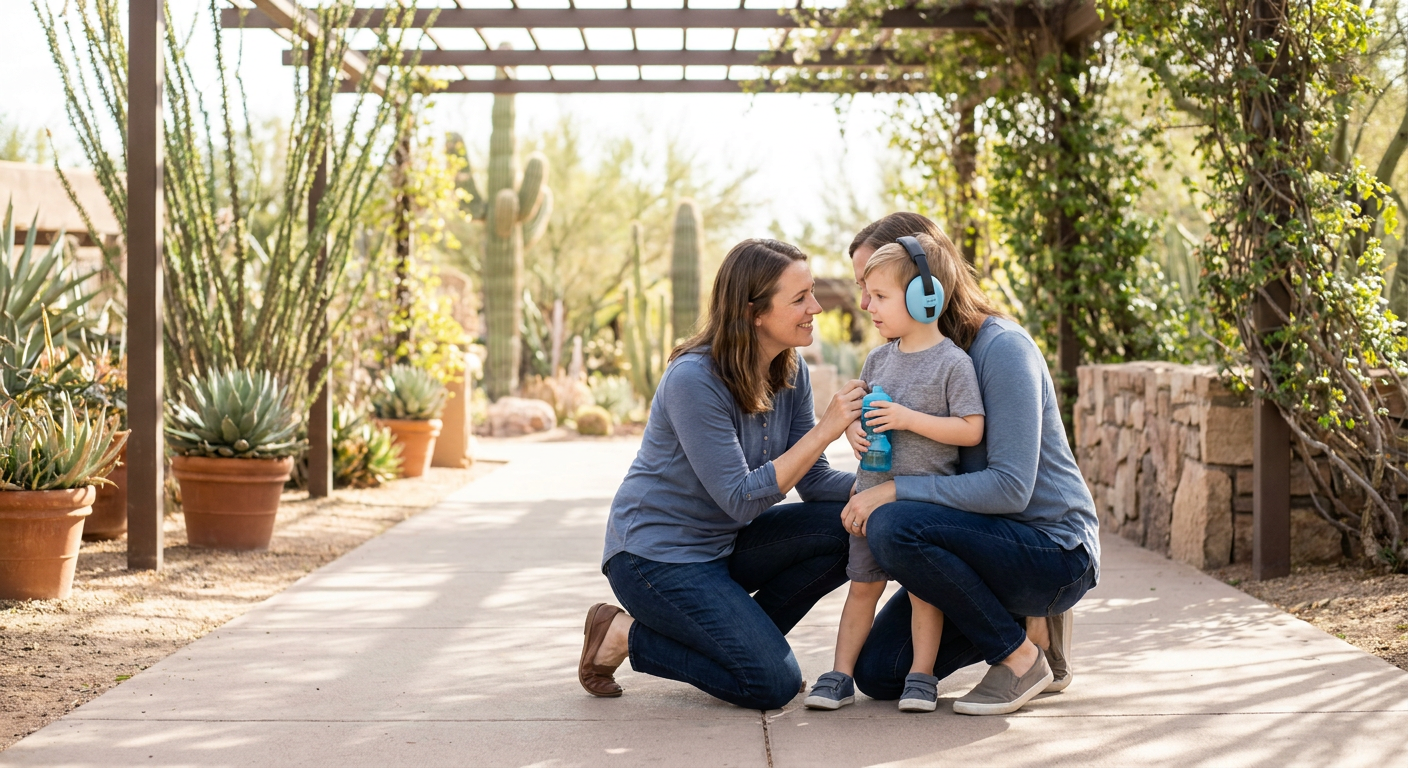
Then think about what needs to be in place before you go. That may include headphones, water, snacks, a comfort item, a visual plan, a change of clothes, or a quick preview of the venue layout. For many families, the same habits that help at home also make community outings easier, which is why practical parent training strategies often focus on previewing, routines, and follow-through.
Keep this part simple. You do not need an oversized checklist for every trip. You just need the few supports that make the outing feel more predictable.
H: Handoff and recovery
Finally, plan the ending before you leave home. Know where you can step away, how you will leave if needed, and what recovery time will look like afterward. That might mean quiet time in the car, a calmer activity at home, or simply no second outing that day.
A successful outing is not always the longest one. Sometimes success means your child tried something new, used a support, or left before becoming fully overwhelmed. Good planning can lower the pressure, but it cannot guarantee a meltdown-free outing.
Phoenix Outings by Sensory Fit
Local outings can support participation, confidence, and flexibility when the fit is right. Many families find that community activities can support progress when the experience feels manageable instead of overwhelming.
Low-stimulation or quieter outing options
For some families, an early-morning visit to the Phoenix Zoo accessibility page is worth considering because the zoo outlines supports such as sensory bags, quiet zones, and headphone zones. It is still a stimulating outing, but starting early can reduce both heat and crowd pressure.
The Desert Botanical Garden can also be a calmer choice for children who do better with open space and a slower pace, especially near opening time before the day gets too hot. Phoenix Art Museum or a quieter library visit may work well for children who do best with shorter indoor outings and fewer abrupt transitions.
Nature-based outings are not automatically easy, but some children regulate better in spaces that feel less crowded and more predictable. If outdoor time usually helps your child reset, you may find useful ideas in this guide to making nature outings feel easier.
Movement-heavy options for kids who regulate through action
Some children feel more settled when they can move. In that case, Altitude Trampoline Park’s sensory-friendly jump times or another movement-based activity space may be a better fit than a seated outing. Movement can help release energy, but it can also bring more noise, visual input, and unpredictability.
Younger children may need shorter activity windows and a clear exit before fatigue sets in. Older children often do better when the plan includes a time limit, a water break, and a calm recovery step afterward.
Short, flexible outings with easy exits
When you are unsure how much tolerance your child has that day, choose something that is easy to shorten. Harkins assistive moviegoing is one example because families can plan around adjusted lighting and sound while still keeping the outing time-limited. A short museum stop, one exhibit, or a simple errand-plus-treat plan may also be enough.
The Children’s Museum of Phoenix can work well when families preview the visit and focus on one or two areas instead of trying to do everything. Its accessibility planning page can help you check supports before you arrive.
Short outings are not lesser outings. They are often the smartest option when you want success in small, repeatable doses.
Indoor Phoenix options for heat-heavy days
During the hottest parts of the year, indoor options become especially helpful. Arizona Science Center, the Children’s Museum of Phoenix, neighborhood libraries, and movie outings can all reduce heat exposure, but indoor spaces can still be noisy, crowded, and visually busy.
Build hydration into the plan before anyone feels depleted. Water, cooling breaks, and a shorter outing window matter just as much as the destination, especially in Phoenix. If your child tends to struggle more once they are hot or thirsty, it may help to read more about why hydration matters before summer outings.
Scheduled sensory-friendly events worth planning around
Some of the best local options are not everyday visits but scheduled lower-stimulation programs. Sensory-friendly movie screenings, venue-led accessibility events, autism-community recreation programs, and special morning access times can lower unpredictability because the environment is intentionally adjusted.
In the Phoenix area, that may include sensory-friendly theater showings, trampoline sessions designed for lower stimulation, or baseball outings where a family has already reviewed supports such as the sensory room at Chase Field. Because accommodations can change by date or program, it is always worth checking the official venue page before you go.
Questions to Ask Before You Go
A quick call or website check can save a lot of stress. Ask whether there is a quiet area, whether sensory tools are available, whether outside snacks or water are allowed, how re-entry works, where the closest bathrooms are, and when the venue is usually busiest.
It also helps to ask about parking distance, shaded waiting areas, stroller access, and whether event-specific supports differ from the venue’s usual setup. For first-time outings, more previewing usually helps. For familiar places, you may only need a simple reminder of the plan.
These planning habits often carry over into other public settings too. If restaurant transitions are hard for your family, some of the same strategies can help there as well, as this article on making restaurant outings easier explains.
What to Do During the Outing if Overload Starts
Start by watching for early signs such as covering ears, moving faster, shutting down, increased scripting, irritability, or a sudden drop in flexibility. When those signs show up, lower the demands quickly. That may mean stepping outside, moving to a quieter corner, offering water or headphones, simplifying your language, or ending the activity sooner than planned.
A simple before-during-after approach can help. Before the outing, identify the exit route and set one or two clear expectations. During the outing, reduce input, shorten the plan, and focus on regulation instead of completion. Afterward, allow time to decompress and make a note of what helped so the next outing is easier to plan.
Younger children may need faster transitions and more co-regulation. Older children may benefit from choice-based language, a pre-agreed signal, or a simple script for asking for a break. If sensory patterns often shape your community outings, it may help to revisit support strategies for sensory sensitivity so you can spot those signs earlier.
Phoenix Sensory-Outing Fit Planner
Use this planner before weekends, school breaks, or a specific outing so you can compare realistic options instead of choosing on impulse.
- Venue or activity: What place are you considering?
- Indoor or outdoor: How much heat, sun, or weather exposure is involved?
- Best time to go: When is the lowest-crowd window likely to be?
- Crowd unpredictability: Does the environment usually feel steady, mixed, or highly variable?
- Noise level: Will your child hear music, announcements, echoing, or large groups?
- Movement demand: Is the outing mostly walking, sitting, climbing, or waiting?
- On-site accommodations: Are there sensory tools, quiet areas, or staff supports?
- Quick-exit ease: How fast can you get back to the car or another calm space?
- Heat exposure or shade: How much of the outing happens outdoors?
- Backup plan if it is too much: What is your pivot if the first choice stops working?
- Call-ahead questions: What do you still need to verify before leaving?
- Recovery plan: What should happen after the outing to help your child reset?
FAQ
What are some sensory-friendly events in Phoenix?
Sensory-friendly events usually offer some combination of lower sound, adjusted lighting, smaller crowds, clearer expectations, or built-in accommodations. In Phoenix, that may include sensory-friendly movie screenings, lower-stimulation jump sessions, special access hours, or community recreation events. Always verify the specific date and supports before attending.
Are there autism-friendly movie screenings in Phoenix?
Yes, Phoenix-area families can often find sensory-friendly or assistive movie options. Look for practical features such as lower volume, more lighting, flexible seating, snack allowances, and an easy way to step out if needed. The best fit depends on your child’s sound tolerance, sitting tolerance, and how long they can stay regulated.
Are there quiet or low-stimulation places for autistic children in Phoenix?
Sometimes, but “quiet” rarely means silent. A better question is whether the outing feels predictable, lower-crowd, and easy to leave. Early zoo visits, quieter museum hours, library outings, and short nature-based plans are often more workable than high-demand attractions during peak times.
What should parents bring to help manage sensory overload during outings?
The basics often matter most: water, snacks, headphones, a comfort item, simple visuals, any needed medication or personal care items, and a clear exit plan. Bring the supports your child already uses well instead of packing for every possible situation.
How can I tell if a Phoenix outing is a good fit for my child today?
Use the P.A.T.H. lens: present state, atmosphere fit, tools and supports, and handoff and recovery. If your child is already tired, hot, hungry, or less flexible than usual, a shorter and simpler outing may be the better choice. That is still a successful choice if it helps your family participate without pushing past capacity.